|
|
|
You can get e-magazine links on WhatsApp. Click here
|
|
|
|
|
|
Food additives: The hidden ingredients shaping modern diets
|
|
Monday, 06 April, 2026, 15 : 00 PM [IST]
|
|
Dr K Anitha
|
In today’s fast paced world, food is expected to be convenient, attractive, long lasting, and flavourful. To meet these expectations, the food industry widely uses substances known as food additives. Though often unnoticed by consumers, food additives play a significant role in determining the quality, safety, and appeal of the foods that eat every day. From packaged snacks to beverages and ready to eat meals, additives have become an inseparable part of modern diets. Understanding what food additives are, why they are used, and how they affect health is essential for making informed food choices.

Understanding Food Additives
Food additives are substances intentionally added to food during processing, preparation, packaging, or storage to achieve specific technological or sensory effects. They may be natural or synthetic and are used in very small quantities. The primary aim of food additives is not to replace food but to enhance its characteristics such as taste, colour, texture, shelf life, and safety. According to international food safety authorities, additives must undergo strict evaluation before approval for use. Each approved additive serves a specific purpose and is regulated with permissible limits to ensure consumer safety. Despite these regulations, food additives often raise concerns due to overuse, misinformation, and lack of awareness among consumers.
The use of food additives is not a modern invention. Ancient civilisations used natural additives long before industrial food processing existed. Salt was used to preserve meat and fish, while sugar and honey were used to extend the shelf life of fruits. Spices and herbs were added to improve flavour and mask spoilage. However, the industrial revolution marked a turning point in the use of additives. Large-scale food production, long distance transportation, and urbanisation created the need for more effective preservation and consistency. This led to the development of synthetic additives that could withstand industrial processes and provide uniform results, shaping the modern food industry as we know it today.
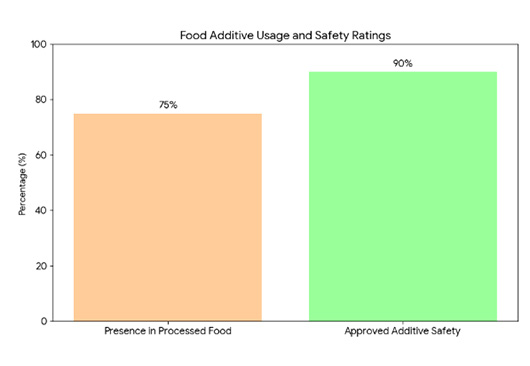 Statistics and Global use of Food Additives Statistics and Global use of Food Additives
Food additives are widely used across the world, and their presence in daily diets can be understood better through statistics. These numbers highlight their scale, usage, and impact on food consumption and health. Studies estimate that over 75% of packaged and processed foods worldwide contain at least one food additive.
In developed and developing countries alike, additives are used to enhance shelf life, flavour, colour, and texture. The global food additives market is valued at over US$40 billion and continues to grow due to rising demand for processed and convenience foods. Research shows that people who consume highly processed foods regularly may ingest 20–30 different additives per day. Children and adolescents are among the highest consumers due to increased intake of snacks, soft drinks, and ready-to-eat foods. It is estimated that children consume up to 2 times more artificial colours per kilogram of body weight than adults.
Artificial vs Natural Additives
Approximately 60% of additives used globally are synthetic, while 40% are derived from natural sources. However, consumer preference is shifting, and food industries report a 15–20% annual increase in demand for natural additives, especially in beverages and bakery products. Less than 1% of the population shows allergic or hypersensitive reactions to specific food additives. Artificial colourants have been linked to behavioural sensitivity in about 5–8% of children, particularly those with attention-related conditions. Regulatory bodies maintain that over 90% of approved additives are safe when consumed within acceptable daily intake limits.
Classification of Food Additives
Food additives can be broadly classified based on their functions. Each category serves a distinct purpose in food processing and storage.
Preservatives: Preservatives help prevent food spoilage caused by microorganisms such as bacteria, moulds, and yeasts. By slowing down microbial growth, preservatives extend the shelf life of food products and reduce food waste. Common examples include sodium benzoate in beverages and nitrates in processed meats. While preservatives improve food safety, excessive consumption has raised health concerns, making regulated use crucial.
Colouring Agents: Colour plays a vital role in consumer perception of food quality. Colouring agents are added to restore colour lost during processing or to make food visually appealing. These may be natural, such as turmeric and beetroot extract, or synthetic, such as tartrazine. Although colours enhance appearance, some artificial colours have been linked to allergic reactions and behavioural issues in children, prompting debates over their use.
Flavouring Agents: Flavouring agents enhance or imitate natural flavours in food. They can be derived from natural sources like vanilla beans or produced synthetically in laboratories. Flavour enhancers such as monosodium glutamate (MSG) intensify taste without adding nutritional value. While generally considered safe within limits, excessive reliance on flavouring agents may encourage consumption of highly processed foods.
Sweeteners: Sweeteners are used to provide sweetness with or without calories. Natural sweeteners like sugar and honey are traditional, while artificial sweeteners such as aspartame and sucralose are commonly used in low calorie and diabetic-friendly foods. These additives help reduce sugar intake, but their long-term effects remain a subject of scientific research and public debate.
Emulsifiers and Stabilisers: Emulsifiers and stabilisers improve texture and consistency by preventing separation of ingredients like oil and water. They are commonly found in ice creams, sauces, and baked goods. Additives such as lecithin and guar gum ensure smooth texture and uniformity, enhancing consumer satisfaction.
Health Implications of Food Additives
The impact of food additives on health depends largely on the type, quantity, and frequency of consumption. Regulatory agencies establish acceptable daily intake levels to minimise risk. Most approved additives are considered safe when consumed within these limits. However, concerns arise from cumulative exposure due to frequent consumption of processed foods. Some individuals may experience allergic reactions, digestive issues, or sensitivity to specific additives. Moreover, excessive intake of foods rich in additives may indirectly affect health by replacing fresh, nutrient dense foods in the diet. While food additives improve taste and appearance, they do not usually enhance nutritional value. In some cases, additives may even mask poor quality ingredients, encouraging overconsumption of highly processed foods. This shift toward additive-rich diets has been associated with rising rates of obesity and lifestyle related diseases. On the positive side, certain additives such as vitamins and minerals are intentionally added to foods through fortification. This practice helps prevent nutritional deficiencies and supports public health initiatives, demonstrating that not all additives are nutritionally insignificant.
Regulation and Safety Assessment
One of the most important contributions of food additives is improving food safety. Preservatives reduce the risk of foodborne illnesses by controlling microbial growth. Antioxidants prevent fats and oils from becoming rancid, maintaining freshness and nutritional quality. In many cases, additives allow foods to remain safe for longer periods without refrigeration, which is particularly important in regions with limited access to cold storage. Thus, when used responsibly, food additives support food security and reduce post-harvest losses. Preservatives help reduce food wastage significantly. Statistics indicate that the use of preservatives lowers food spoilage by 30–40%, especially in dairy, meat, and baked products. This contributes to improved food security and reduced economic loss. Food additives are strictly regulated by national and international authorities. Before approval, additives undergo scientific testing to evaluate toxicity, metabolic effects, and long-term health impact. Regulatory bodies continuously monitor research findings and revise guidelines as necessary. Labelling regulations also require manufacturers to list additives on food packaging, enabling consumers to make informed choices. Despite these measures, effective regulation depends on enforcement, transparency, and public awareness. Surveys reveal that only 35–40% of consumers regularly read food labels, and among them, less than 25% fully understand additive names or codes. This highlights the need for better food education and clearer labelling systems. Informed consumers play a key role in managing additive intake. Reading food labels, understanding ingredient lists, and choosing minimally processed foods can significantly reduce unnecessary exposure to additives. Awareness campaigns and nutrition education empower individuals to balance convenience with health, rather than avoiding all additives, consumers should focus on moderation and dietary diversity. Fresh fruits, vegetables, whole grains, and home cooked meals naturally contain fewer additives and offer greater nutritional benefits.
The Future of Food Additives
With growing health consciousness, the food industry is shifting toward natural and plant based additives. Advances in food science aim to develop safer alternatives that meet consumer demand for clean label products. Innovation continues to balance technological needs with health and sustainability concerns. As research progresses, food additives will likely evolve to support both convenience and well-being. Responsible use, informed regulation, and consumer awareness will remain central to their role in the global food system. Food additives are an integral part of modern food production, offering benefits such as improved safety, extended shelf life, and enhanced sensory appeal. While they are not inherently harmful, excessive reliance on additive-rich foods may pose health concerns. A balanced approach combining regulatory oversight, industry responsibility, and consumer awareness is essential. By understanding food additives and making mindful dietary choices, individuals can enjoy the benefits of modern food technology without compromising health. Informed consumption remains the key to navigating the hidden ingredients that shape our daily meals.
(The author is assistant professor, Department of Pharmacology, School of Pharmacy and Technology Management, SVKM's Narsee Monjee Institute of Management Studies Deemed to-be University, Shirpur)
|
|
|
|
|
|
|
|
|
|