|
|
|
You can get e-magazine links on WhatsApp. Click here
|
|
|
|
|
|
Novel edible cutlery made of jowar, thanks to 2 Andhra based scientists
|
|
Friday, 15 May, 2009, 08 : 00 AM [IST]
|
|
Our Bureau, Mumbai
|
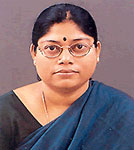 An Andhra based company has come up with a unique idea of getting the poor man's staple to the big man's table in an innovative and logical way. B K Environmental Innovations have designed edible cutlery from the long forgotten jowar (Sorghum), which can be eaten at the end of the meal. An Andhra based company has come up with a unique idea of getting the poor man's staple to the big man's table in an innovative and logical way. B K Environmental Innovations have designed edible cutlery from the long forgotten jowar (Sorghum), which can be eaten at the end of the meal.
What struck behind the idea was the concern of two scientists earlier working at ICRISAT (International Crops Research Institute for the Semi-Arid Tropics) -- Rama Devi, who is currently the CEO of B K Environmental Innovations (brand name Bakey's) and Narayana Peesapaty, the managing director.
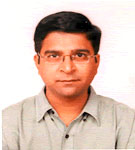 Narayana holds masters in Forestry Management and has over 16 years of consulting and research experience. During his career, he worked on various fields including renewable energy, environment, agriculture, rural development, etc. He is a highly creative thinker, who conceived the idea of edible cutlery, solar thermal electricity, etc. Narayana holds masters in Forestry Management and has over 16 years of consulting and research experience. During his career, he worked on various fields including renewable energy, environment, agriculture, rural development, etc. He is a highly creative thinker, who conceived the idea of edible cutlery, solar thermal electricity, etc.
Rama is an cconomist by training. She has over 15 years of teaching experience and four years of research experience. Rama was instrumental in designing processes for different flavours and even colours using vegetable pulp. She has a clear understanding of food production safety procedures, HACCP, ISO and is also trained in Nuero Linguistic Programme.
Says Ms Devi, "While working at ICRISAT, we were hit by the idea that something should replace the toxic and chemical-laden plastic disposable spoons. We were determined to find some solution to this environmental problem. In 2006 we left our jobs at ICRISAT and formed a private limited company called B K Environmental Innovations. Our company has been selected by the Confederation of Indian Industries (CII) in the top 10 sustainable business categories."
This initiative if successful is likely to give a boost to the declining jowar production in the country. The company intends to design spoon, forks, knives and chopsticks and in a way promote contract farming in India. It is currently targeting about 30,000 acres across jowar-growing areas in the country and is contemplating buyback arrangement with the farmers for continuous supply.
The company is also patronised by Tata-Nen for start-ups. Further, the company is contemplating a tie-up with the National Research Institute for Sorghum. The tie-up likely in the next 15-30 days would see a joint effort by the two parties in increasing the production and consumption of jowar.
Says Narayana, "The statistics for area under jowar are not reliable but in Andhra Pradesh the jowar belts have vanished. One reason could be the government policies and second jowar like rice does not have a minimum support pricing system (MSP). Besides, it is branded as a poor man's staple." Sorghum has high nutritive value and is low in fat content. It is rich in iron, calcium, proteins, fibres and minerals. Besides, rice consumes more water and chemicals (around 60% more than jowar). The company plans to market these products through medical outlets.
Bakey's innovation could be the first in the world because the existing edible cutlery from countries like France and China use raw edible ingredients like potato skin for making the cutlery and cannot be eaten. However, Bakey's products can be consumed after the meals or along with the meals. The idea is similar to that of an ice cream cone. What is worth mentioning about the company is the Rs 70 lakh invested by the company have come from friends and relatives of Ms Devi and Narayana, however, they are now in talks with investors for further investments.
Another point of appreciation for Bakey's comes from the fact that it is a socially sensitive enterprise. The company has a policy to recruit staff from under privileged families. Current staff of the company has over 70% of women and the board of directors comprises 60% women.
|
|
|
|
|
|
|
|
|
|